 by
by Buying a pre-owned vehicle in India is a financially savvy move, especially with new car prices and taxes climbing. However, the used car market can be a minefield of hidden accidents, tampered odometers, and legal hurdles. To ensure your “new” car doesn’t become a permanent resident at the mechanic’s shop, follow this comprehensive guide to inspecting a used car like a pro.
1. Preparation: The Pro’s Toolkit
Before you head out, timing and tools are everything.
- Pick a Sunny Day: Bright daylight is essential to spot paint mismatches, ripples in body panels, and hidden rust.
- Bring a Companion: A second pair of eyes—ideally a trusted mechanic—can spot flaws you might miss in the excitement.
- The Inspection Kit: Carry a high-intensity flashlight for the underbody, a clean rag to check oil quality, and a smartphone to verify details on government portals like mParivahan.
2. Exterior Inspection: Reading the Body Language
A car’s exterior tells its life story if you know where to look.
- The “Line of Sight” Test: Squat at the corners of the car and look down the side panels. Any waviness or ripples suggest past accident repairs.
- Panel Gaps: Check the spaces between doors, the hood, and the trunk. These gaps should be uniform. Uneven gaps are a classic sign of structural repair after a collision.
- Paint Consistency: Use your flashlight to look for “overspray” on rubber seals or slightly different textures on adjacent panels. Factory paint is smooth and multi-layered, while aftermarket repaints often feel rough or show “orange peel” textures.
- Magnet Test: Run a small magnet over suspected repair areas. If it doesn’t stick, the panel likely has heavy body filler (putty) underneath.
3. Under the Hood: The Heart Check
Don’t be fooled by a steam-cleaned engine bay; it might be masking leaks.
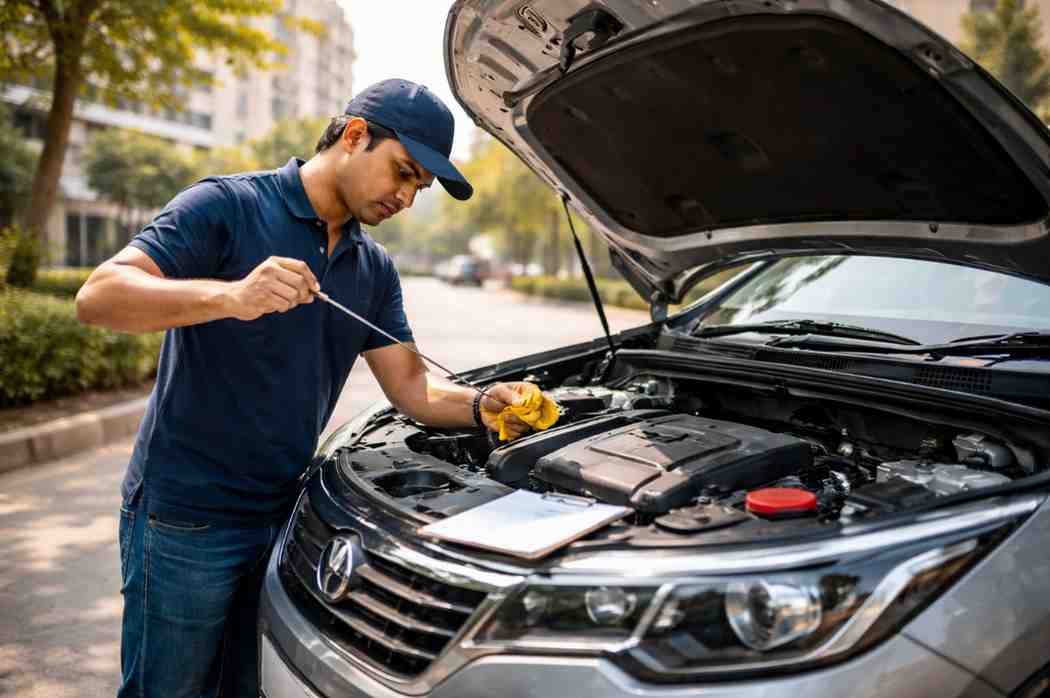
- Fluid Health: Check the engine oil. It should be amber or brown. If it’s black and gritty, the car has been neglected. “Milky” oil suggests a blown head gasket—a catastrophic failure.
- Coolant and Brake Fluid: Ensure the coolant is red, green, or blue, and transparent. If it looks like muddy water, the radiator is likely rusting from the inside.
- Cold Start: Always insist on starting the engine when it’s cold. A warm engine can hide starting trouble or “knocking” sounds that reveal themselves only when cold.
4. Detecting Odometer Fraud: The “Real” Mileage
Odometer tampering is common in India. Here is how to verify the truth:
- Check the Wear Points: A car with a “low” 30,000 km reading shouldn’t have a shiny, worn-out steering wheel, bald pedal rubbers, or sagging driver’s seat cushions.
- Tyre Timeline: Look for the 4-digit manufacturing code on the tyre sidewall (e.g., “1224” means the 12th week of 2024). If a car has done only 20,000 km but has brand-new tyres, ask why.
- Service History Digital Trail: Cross-check the odometer against the last entry in the physical service booklet and the VAHAN portal entries.
5. The Test Drive: Assessing On-Road Health
Drive the car for at least 5–10 km on various road types.
- Suspension: Listen for “thuds” or “clunks” over speed bumps, which indicate worn-out bushes or struts.
- Braking: On a safe, empty stretch, brake firmly. The car should stop in a straight line without pulling to one side or vibrating the steering wheel.
- Clutch and Gears: The clutch should feel light and engage smoothly. If it’s “hard” or the engine revs without the car speeding up, the clutch plate needs replacement.
6. Paperwork: The Deal-Breaker
Legal safety is as important as mechanical health.
- RC and Chassis Number: Ensure the chassis number etched on the car (usually under the seat or on the dashboard) matches the Registration Certificate (RC) exactly.
- Insurance & Claims: Ask for the insurance history. Multiple claims for the same side of the car point to major accidents.
- No-Objection Certificate (NOC): If the car was purchased on loan, make sure the seller provides an “HP Deletion” NOC from the bank.
FAQs
- Is it okay to buy a car with a repainted bumper?
Yes. In Indian city traffic, minor bumper scratches and repaints are common. Focus on checking the internal frame and aprons for damage rather than just the plastic bumpers.
- What is the average annual mileage for a car in India?
Typically, an Indian car runs between 5,000 and 10,000 km annually. Anything significantly higher suggests heavy highway or commercial use.
- How do I know if a used car was caught in a flood?
Pull the seatbelts all the way out; look for moisture or mud stains at the very end. Also, check for a persistent musty smell or rust under the floor carpets.
- Should I buy a car from a private seller or a dealer?
Private sellers are often cheaper, but dealers (especially certified ones) may offer limited warranties and handle the paperwork transfer, which can be a significant convenience.
- Can I negotiate the price after a professional inspection?
Absolutely. Use the inspection report as leverage. If the car needs new tyres (₹20,000) or a major service (₹10,000), subtract these costs from the asking price during negotiations.