 by
by With rising fuel costs, stricter emission norms, and growing awareness about sustainability, Indian car buyers are increasingly asking one question: EV vs Hybrid cars, which one is better?
Both Electric Vehicles (EV cars) and Hybrid cars promise lower running costs and reduced environmental impact, but they work very differently. Understanding how cars in these two categories operate, perform, and fit into Indian conditions is essential before making a decision.
This automobile guide breaks down the real differences between EV and Hybrid cars, helping you choose the option that best suits your lifestyle, driving habits, and budget.
What Is an Electric Car (EV)?
An electric car runs entirely on electricity stored in a battery pack. It uses an electric motor instead of a traditional petrol or diesel engine.
Key characteristics of EV cars:
- Zero tailpipe emissions
- No fuel tank, gearbox, or exhaust system
- Charged via home chargers or public charging stations
- Extremely quiet and smooth to drive
EV cars are best suited for buyers ready to fully shift away from fossil fuels.
What Is a Hybrid Car?
A hybrid car uses two power sources:
- An internal combustion engine (petrol)
- An electric motor with a small battery
The system intelligently switches between the two to improve fuel efficiency and reduce emissions.
Key characteristics of hybrid cars:
- No need for external charging
- Battery recharges automatically through regenerative braking
- Lower emissions than regular petrol cars
- Familiar driving experience
Hybrids act as a bridge between petrol cars and EV cars.
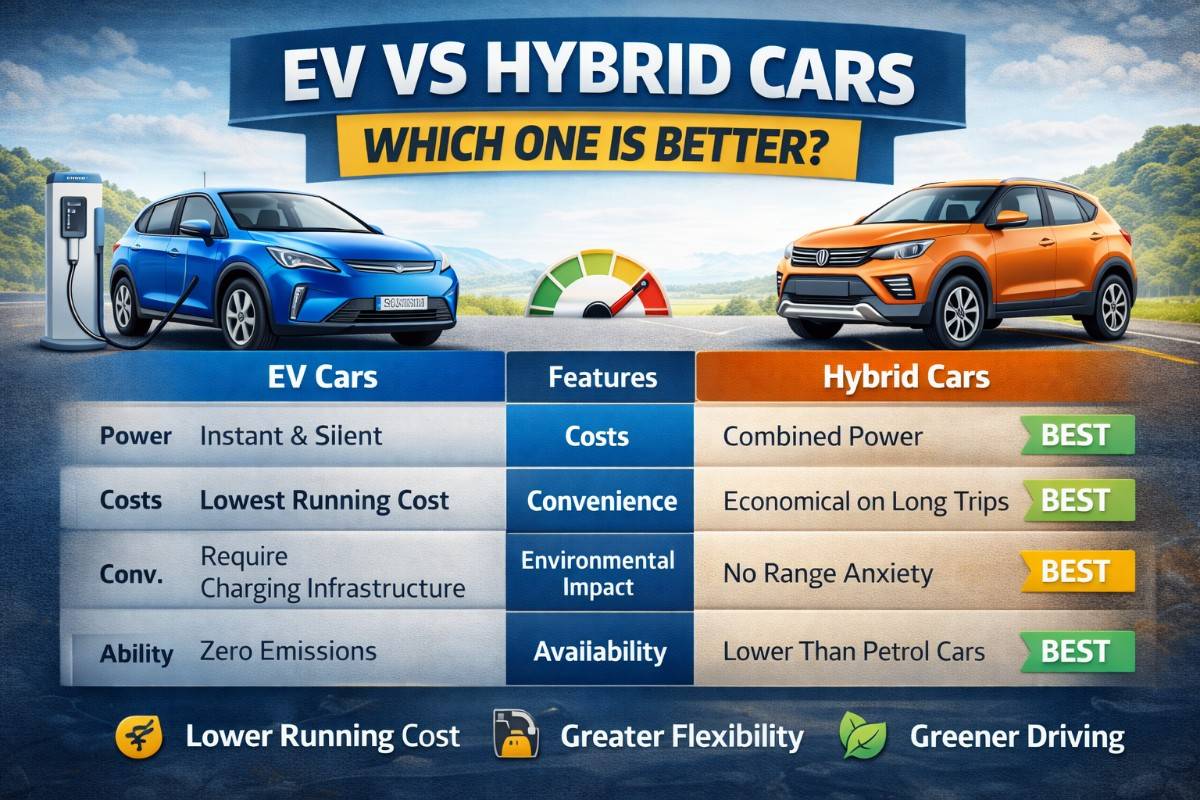
EV vs Hybrid Cars: Key Differences Explained
1. Power & Driving Experience
EV Cars
- Instant torque and quick acceleration
- Silent and vibration-free driving
- Ideal for city traffic
Hybrid Cars
- Smooth in city driving using electric assist
- Petrol engine takes over at higher speeds
- Feels similar to a conventional car on highways
Winner: EV cars for smoothness and city comfort.
2. Running & Maintenance Costs
EV Cars
- Lowest running cost per kilometre
- Minimal maintenance (no oil changes, fewer moving parts)
Hybrid Cars
- Better fuel economy than petrol cars
- Still require engine servicing and oil changes
Winner: EV cars in the long run.
3. Range & Convenience
EV Cars
- Range depends on battery capacity
- Charging infrastructure still developing in India
- Requires planning for long trips
Hybrid Cars
- No range anxiety
- Petrol engine ensures long-distance reliability
- No dependency on charging stations
Winner: Hybrid cars for flexibility and convenience.
4. Environmental Impact
EV Cars
- Zero tailpipe emissions
- Cleaner air in cities
- Overall impact depends on electricity source
Hybrid Cars
- Lower emissions than petrol cars
- Still burn fossil fuels
Winner: EV cars for environmental benefits.
5. Purchase Price & Government Support
EV Cars
- Higher upfront cost
- Benefit from government subsidies and lower road tax in many states
Hybrid Cars
- Slightly cheaper than EVs
- Limited incentives in India
Winner: Depends on state policies and budget.
Which Is Better for Indian Roads?
EV Cars Are Better If:
- Your daily commute is within city limits
- You have access to home or workplace charging
- You want the lowest running cost
- You plan long-term ownership
Hybrid Cars Are Better If:
- You frequently drive long distances
- Charging stations are not easily available
- You want better mileage without changing habits
- You prefer petrol backup for peace of mind
EV vs Hybrid Cars: Which One Is Better for You?
There is no universal winner. The answer depends on how you use your car.
| Driving Pattern | Better Choice |
| Daily city commute | EV cars |
| Mixed city + highway | Hybrid cars |
| Long-distance travel | Hybrid cars |
| Lowest running cost | EV cars |
| Charging not available | Hybrid cars |
Future Outlook in India
India is rapidly expanding:
- EV charging infrastructure
- Battery technology
- Government incentives
At the same time, hybrids continue to attract buyers who want fuel efficiency without charging concerns. Over the next few years, EV adoption will rise sharply, but hybrids will remain relevant during the transition phase.
Final Verdict: EV vs Hybrid Cars
So, EV vs Hybrid cars—which one is better?
- EV cars are the future: cleaner, cheaper to run, and technologically advanced
- Hybrid cars are the present: practical, reliable, and stress-free for long journeys
If you’re ready to embrace change and have charging access, EV cars are the smarter long-term choice. If you want efficiency with familiarity, hybrids are still an excellent option.
This EV vs Hybrid cars: which one is better? guide helps you decide based on facts—not hype.
FAQs: EV vs Hybrid Cars
- Are EV cars cheaper to maintain than hybrid cars?
Yes. EV cars have fewer moving parts and no engine oil, making maintenance cheaper. - Do hybrid cars need charging?
No. Hybrid cars charge their batteries automatically while driving. - Are EV cars suitable for long trips in India?
They are improving, but planning is required due to limited fast-charging infrastructure. - Which is more eco-friendly: EV or hybrid?
EV cars are more eco-friendly due to zero tailpipe emissions. - Should I buy an EV now or wait?
If your usage is city-based and charging is available, buying an EV now makes sense.