 by
by Choosing the right transmission is one of the most significant decisions you will make when purchasing a vehicle. While manual cars have long dominated Indian roads due to their affordability and fuel efficiency, automatic transmissions, ranging from budget-friendly AMTs to high-performance DCTs are rapidly surging in popularity. This guide breaks down the essential factors to help you decide which gearbox truly fits your lifestyle.
Introduction
A car’s transmission, or gearbox, is responsible for sending power from the engine to the wheels to help the car move. Traditionally, this required the driver to manually operate a clutch and gear lever. Today, modern technology offers several “auto” variants that shift gears mechanically, reducing driver intervention and making commutes far more comfortable in congested urban areas.
Key Factors to Consider
Before making a choice, evaluate your daily driving habits against these core factors:
- Driving Environment: Do you primarily navigate bumper-to-bumper city traffic or open rural highways?
- Budget: Consider both the upfront purchase price and the long-term maintenance costs.
- Experience Level: Beginners often find the absence of a clutch pedal much easier to master.
- Resale Expectations: Demand for automatics is rising in metro cities, while manuals remain the “kings” of rural and hilly markets.
Detailed Breakdown: Understanding the Gearbox
Manual Transmission (MT)
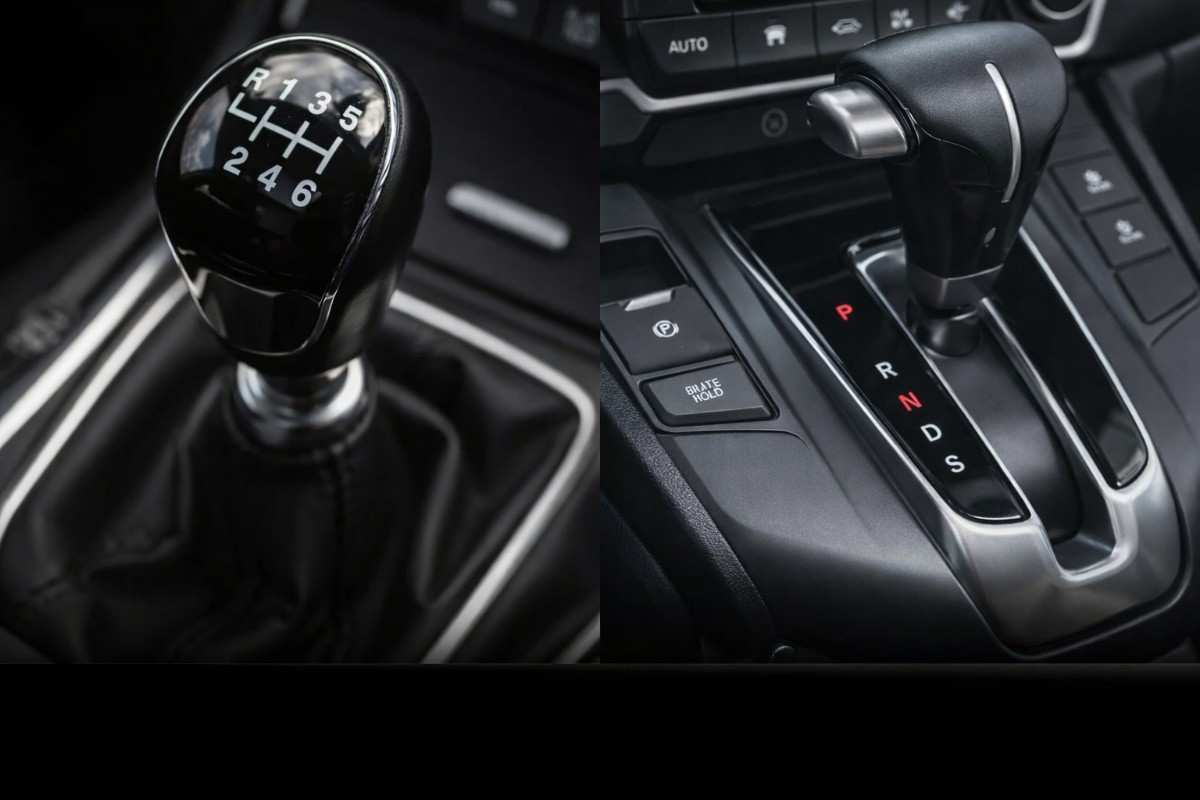
The driver is fully in control, using a hand-operated lever and a foot-operated clutch to manage engine power. It is the most common transmission in India and is preferred by driving enthusiasts for its superior performance and control.
Automatic Variants
- Automated Manual Transmission (AMT): The most affordable “auto” in India. It is essentially a manual gearbox where a hydraulic actuator handles the clutch and shifts for you.
- Continuously Variable Transmission (CVT): Uses pulleys and belts instead of traditional gears to provide a smooth, judder-free experience. It is often the most fuel-efficient choice for city driving.
- Dual Clutch Transmission (DCT/DSG): An advanced system using two clutches for lightning-fast gear changes. It is mostly found in high-end or performance vehicles.
Pros & Cons
| Feature | Manual Transmission | Automatic Transmission |
| Pros | Lower purchase price; simpler mechanics; better control on hills. | Stress-free city driving; no clutch fatigue; ideal for beginners. |
| Cons | Tiring in heavy traffic; steep learning curve for new drivers. | Upfront cost is ₹1–2 lakh higher; complex and costlier repairs. |
Expert Tips
- Match to Terrain: Choose a manual if you live in hilly regions (like Shimla or Ooty) to benefit from better engine braking on descents.
- Automate for the Metro: If you live in a city like Delhi, Mumbai, or Bangalore, an automatic will significantly reduce driving stress during peak hours.
- Protect Your Investment: Regardless of the transmission, applying a Paint Protection Film (PPF) can help maintain your car’s exterior and boost its overall resale value.
Common Mistakes to Avoid
- Ignoring Maintenance: Automatic gearboxes are complex; skipping specialized services can lead to expensive failures.
- Poor Driving Habits (Automatic): Never shift to “Neutral” while coasting down a hill or shift to “Reverse” while the car is still moving forward.
- Focusing Only on Price: While a manual is cheaper upfront, a poorly chosen model might have a much lower resale value in your local market a few years later.
FAQs
Are automatic cars less fuel-efficient?
Historically yes, but the gap is narrowing. Modern AMTs and CVTs are now highly fuel-efficient and often on par with manuals in city conditions.
Do I need a different license for an automatic car?
No. In India, a regular driving license allows you to operate both manual and automatic vehicles.
Which is better for hilly areas?
Manuals are generally superior for hills because they allow the driver to manually select lower gears for steep climbs and control speed through engine braking.
Final Verdict
The choice between a manual and an automatic car is entirely subjective and depends on your lifestyle. If you are a budget-conscious driver or an enthusiast who loves full control over every gear shift, the Manual remains your best bet. However, if your daily reality involves heavy traffic and you value convenience and comfort above all else, the Automatic is a worthy investment.