 by
by Choosing a new car in India today is no longer just about design or brand, it’s about fuel type. With rising fuel prices, changing emission norms, and the growing push toward sustainability, many buyers are confused about the difference between petrol, diesel, and electric cars.
Each option has its strengths and limitations. Understanding how cars powered by petrol, diesel and electricity differ in cost, performance, maintenance, and suitability can help you make a smarter long-term decision.
This automobile guide breaks it all down clearly and practically.
Understanding the Three Car Types
Before comparing, let’s understand how each type works.
Petrol Cars
Petrol cars use an internal combustion engine that runs on petrol. They are the most common cars on Indian roads and are known for smooth driving and lower upfront cost.
Diesel Cars
Diesel cars also use internal combustion engines but run on diesel fuel. They are designed for higher torque and better fuel efficiency, especially on highways.
Electric Cars
Electric cars (EVs) run entirely on electricity stored in batteries. They use electric motors instead of engines and produce zero tailpipe emissions.
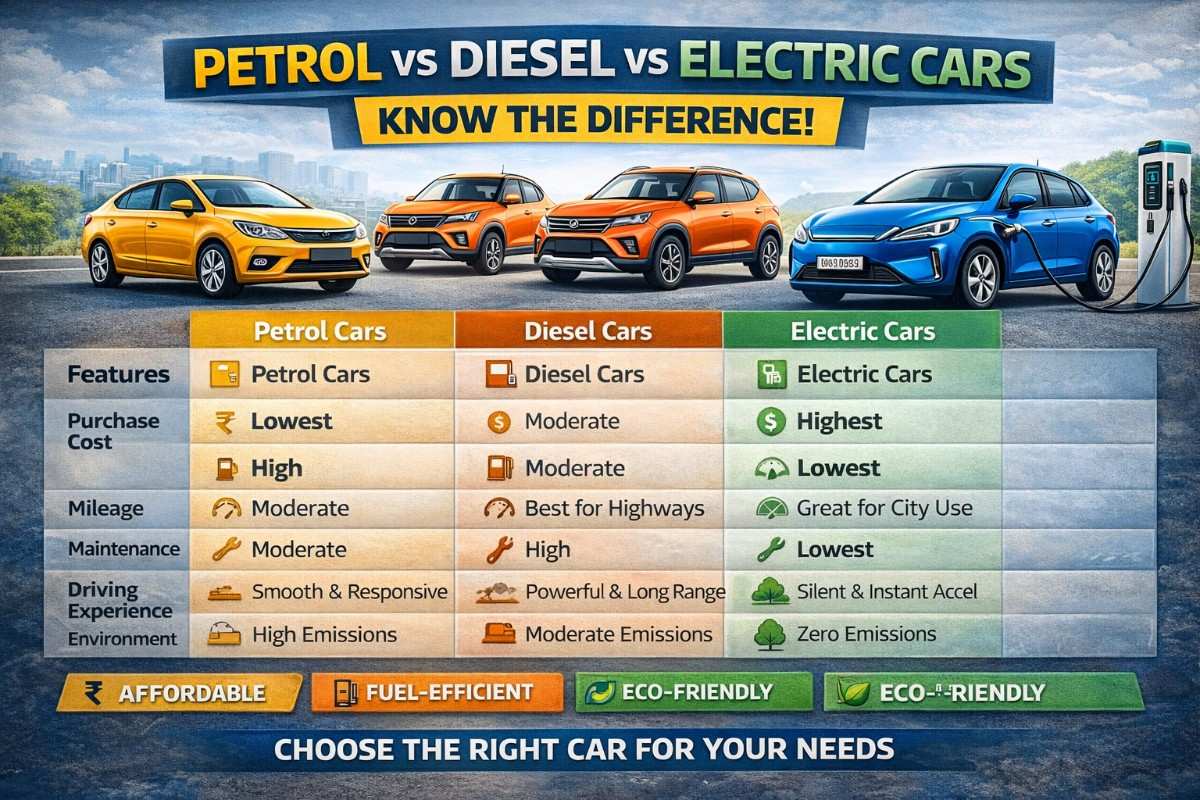
Difference Between Petrol, Diesel, and Electric Cars: Key Factors
1. Purchase Cost
- Petrol cars are usually the cheapest to buy
- Diesel cars cost more due to stronger engines and components
- Electric cars have the highest upfront cost because of battery technology
However, purchase price is only one part of ownership.
2. Fuel & Running Cost
This is where the difference becomes very clear.
- Petrol cars: Higher fuel cost per kilometre
- Diesel cars: Better mileage, lower cost for long-distance driving
- Electric cars: Lowest running cost, electricity is much cheaper than fuel
For frequent drivers, electric cars offer massive long-term savings.
3. Mileage & Range
- Petrol cars: Moderate mileage, suitable for city use
- Diesel cars: Best mileage and longest range on a full tank
- Electric cars: Limited range per charge, improving with newer models
Diesel still dominates for long highway journeys, while EVs excel in daily city travel.
4. Maintenance & Servicing
Maintenance is a major ownership cost.
- Petrol cars: Moderate maintenance, regular oil changes required
- Diesel cars: Higher maintenance due to complex engines
- Electric cars: Lowest maintenance, fewer moving parts
Electric cars do not need engine oil, clutch, or exhaust system repairs.
5. Driving Experience
- Petrol cars: Smooth, quiet, and responsive
- Diesel cars: Strong pulling power, best for loaded or highway driving
- Electric cars: Silent, vibration-free, instant acceleration
EVs provide the most refined city driving experience.
6. Environmental Impact
- Petrol cars: Moderate emissions
- Diesel cars: Higher NOx and particulate emissions
- Electric cars: Zero tailpipe emissions
For buyers concerned about pollution and sustainability, electric cars are clearly ahead.
Which Car Type Is Best for Indian Conditions?
Choose a Petrol Car If:
- You drive short distances daily
- Budget is limited
- Mostly city usage
- Lower annual running
Choose a Diesel Car If:
- You drive more than 15,000 km per year
- Highway usage is high
- You need strong performance for long trips
Choose an Electric Car If:
- Daily commute is predictable
- Charging is available at home or work
- Long-term cost savings matter
- You want eco-friendly mobility
Cost of Ownership: Long-Term Perspective
While petrol cars look affordable initially, fuel costs add up quickly. Diesel balances purchase price and efficiency but comes with maintenance and regulatory concerns. Electric cars cost more upfront but save significantly on fuel and servicing over 5–10 years.
This long-term view is essential when comparing the difference between petrol, diesel, and electric cars guide.
Future Outlook in India
India is rapidly moving toward electrification:
- More EV charging stations
- Government incentives
- Improved battery range
Petrol and diesel cars will remain relevant in the short term, but electric cars represent the future of personal mobility.
Final Verdict: Which One Should You Buy?
There is no single “best” option for everyone.
- Petrol cars = affordable & convenient
- Diesel cars = efficient for long distances
- Electric cars = lowest running cost & eco-friendly
Your choice should depend on usage pattern, budget, fuel availability, and long-term plans.
This difference between petrol, diesel, and electric cars guide helps you choose wisely, not emotionally.
FAQs: Difference Between Petrol, Diesel, and Electric Cars
- Which car type is cheapest to maintain?
Electric cars have the lowest maintenance cost. - Are diesel cars still worth buying in India?
Yes, if you drive long distances regularly and live outside strict emission zones. - Do electric cars really save money?
Yes. Over time, lower fuel and maintenance costs offset the higher purchase price. - Which is best for city driving?
Electric and petrol cars are best for city conditions. - Is charging infrastructure sufficient in India?
It is improving rapidly, especially in metro cities.